

A first aid kit is something that everyone should have at home, whether it’s a small, portable one or a large kit with hundreds of pieces. First aid kits are essential when it comes to treating small, non-hospital injuries like burns, scrapes and wounds, but they’re also great to take with you on vacations or short trips in case anything unexpected pops up.
“Emergencies don’t come with advance notice so first aid kits are essential to being able to handle minor and emergency situations,” says Dr. Chandani DeZure, a double-board certified pediatrician at Stanford Medicine Children’s Health. “I typically recommend having first aid kits for both ease, convenience, and safety.”
To find the best first aid kits, including portable ones that fit in a backpack, glove compartment or tote, I spoke with DeZure and other medical experts for their guidance and recommendations. The first aid kits I recommend below vary by price, size, and resources to make it easier for you to find one or multiple options suitable for your needs.
 Best compact first aid kit$undefined$11.21
 Best budget first aid kit$10.50$14.69


Related

Want more from NBC Selected? Sign up for our newsletter, The Selection, and shop smarter.
The best first aid kits
All of the products below are either direct recommendations from our experts or editors, or have at least a four-star rating from 500 or more reviews on Amazon.
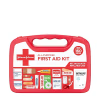
Best overall first aid kit

Band-Aid’s first aid kit has a lot of what you’d expect to find in most traditional first aid kits, but it also has much more. In addition to just regular adhesive bandages, it has ones of different sizes and even includes butterfly closures. It also comes with Tylenol for pain relief, hand wipes, multiple types of gauze and angled scissors, which can be helpful when cutting medical tape, gauze and bandages. It also has anti-itch cream in case you have a reaction to something like poison ivy or poison oak.
Shoppers also say that they like that the kit has a lot of supplies needed for common injuries. Plus, many people who bought it like to keep it in their cars or RVs.
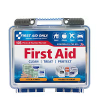
Best compact first aid kit

This small first aid kit is perfect for anyone who wants a basic supply that has just about everything to help tend to minor but common injuries. The square-shaped container is clear on the front and it opens up like a small briefcase, so it’s easy to see where everything (and grab it) is at a moment’s notice. It has a handle on the top and latches to keep it securely closed, as well as small loops, which you can use to attach to something like a backpack or duffel bag.
It’s only around 5 inches by 5 inches, so it fits in a glove compartment, a coat pocket, a tote or other small personal item you might keep with you all the time.
Best wall-mount first aid kit

If you want an almost all-inclusive first aid kit, this is the best option on this list. While you may have to buy a few other items to make sure the kits have everything you want, this one has a lot. It has multiple types of adhesive bandages, butterfly closures, several types of gauze, including sponges made from gauze, gloves, a face mask and much more. Plus, all of the supplies come in a plastic container with multiple trays for holding everything.
The case has a handle at the top with loops that you can attach to personal items. Another great feature about this kit is that you can mount it on the wall, which allows you to have it out in the open and ready to use, particularly because the cover is clear, similar to some other first aid kits on this list.
Best travel first aid kit

This is the perfect first aid kit for someone who wants something that is not only very simple, but small enough to fit in almost any pocket or backpack. The case is only 6.2 inches by 5.5 inches and weighs less than 7 ounces, and the front of the case is clear, so not only does it fit in small areas, it’s also easy to see what you have at any given moment, in case you need to refill on medication, bandages or hand wipes. Shoppers say they enjoy that it’s compact but also includes practically everything you need.
Most durable case

This first aid kit also has a lot, including items that would be useful if you find yourself outdoors and lost, like a whistle and a compass. You can bring this along with a separate hiking emergency kit, during camping trips or during any form of long-distance travel by car. Just like all of the options on this list it has bandages, but it also has adhesive bandages of different sizes, shapes and types, as well as butterfly closures, safety pins, tweezers and multiple types of gauze.
The kit is also available in several sizes, including options with 85, 100 and 200 pieces. It comes with a zipper and a fabric container (with a handle), while the 85-piece kit is the only option that has a clear plastic case.
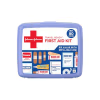
Best kid-friendly first aid kit


This first aid kit is mainly made up of bandages, making it the perfect set for children to use on their own (though you’ll want to keep the pain meds out of reach). The reusable tin and bandages come with vibrant patterns and colors, and the kit has everything they need to patch up their own nicks and scuffs, plus no scissors you need to worry about them mishandling.
“My kids actually ask for a bandage now; the fun designs turn every scrape into a mini celebration,” says NBC senior production manager Rebecca Delman. “The case is small and compact, so I keep it in my bag or the car. It comes with an assortment of colors and sizes, plus medicine for bumps and bruises. Best of all, they actually stay on!”
How I picked the best first aid kits
Here’s everything our experts recommend considering before buying first aid kits to keep at home or in your car.
Supplies and medication: Regardless of the size, most first aid kits should include supplies to help treat small but common injuries. “To me, this would include adhesive bandages of different sizes, gauze, alcohol wipes, wrap bandage, medical tape, antibiotic ointment, vaseline, disposable nitrile gloves, tweezers, small scissors, CPR face shield, burn gel, and a flashlight,” says pediatrician DeZure. “Depending on the circumstances, you may want to add a foil blanket and whistle if hiking, or ankle braces/splints and ice pack if playing sports, or medications such as antacids, hydrocortisone cream, aloe vera, acetaminophen, ibuprofen (for pain/fever), or diphenhydramine (for allergies).”
DeZure also recommends making sure that you have products, including proper dosages of medicine for children. Outside of medication for pain relief, you should also consider adding something like an epinephrine pen to your first aid kit, particularly if you will be spending time outdoors. You should also consider adding Narcan to a first aid kit to prevent overdoses, according to DeZure.
With all of this in mind, I made sure to include first aid kits that come with at least adhesive bandages, gauze, alcohol wipes, antibiotic ointment, gloves, tweezers and some form of pain relief medication, since many of these can be used to treat the most common types of non-emergency injuries. Things like small open wounds, scratches, scrapes, small burns, sprains, headaches and splinters can often be treated with these supplies. Some of the first aid kits I included however, included these products and more, such as things for emergency situations that are somewhat less common, such as a thermal blanket and whistle, in case you find yourself stranded or lost outdoors.
Size: In selecting the first aid kits above, I also considered their general size, where they could be kept and what types of emergencies they could be used for. “For the most part, the first aid kit is either a solution to a minor problem or a temporary measure until more emergency help can arrive,” says DeZure. “Depending on the circumstances, a larger first aid kit can provide more options and solutions for a broader range of problems than a smaller one.”
With this in mind, it might be worth having multiple kits for different situations or places (for example the one in your car may be less equipped than the one in your home). Additionally, if you don’t live close to or have access to a hospital or some other form of emergency care, that may be more of a reason to shop for a first aid kit with more resources than the traditional first aid kit.
How to shop for a first aid kit
Here is what you should keep in mind when shopping for first aid kits for you and/or your family.
Decide how you’ll use it. “Personalizing a first aid kit will take more time than buying one, but that extra time spent will be worth it in the event that a first aid kit is needed,” says DeZure. Most generic first aid kits will have things for wounds, small burns, scratches, like adhesive bandages and antibiotic ointment, so more basic kits may be suitable. With that said, if you or your family spends more time outdoors or plays sports, for example, you may need a first aid kit with more supplies.
Make personalizations to it. “The benefits of having a first aid kit are going to vary based upon what you put in it and why you need it,” says Dr. Megan Cobb, a pediatric emergency medicine physician at the University of Maryland Golisano Children’s Hospital. “On an everyday basis, it is great to be able to quickly address your family’s or your own scratches and cuts to reduce bleeding, infection risk, and improve comfort.” In other words, keep in mind that you may have to add items separately based on your needs, like bottled water, an epinephrine pen, an inhaler or other items that don’t traditionally come in first aid kits.
Shop for travel-friendly options. In addition to having a first aid kit you can keep at home and reach for at any given moment, you should also consider keeping a portable one, such as one you can store in your care for more unexpected moments.
Make sure it has supplies for people of all ages. It’s important to remember that you won’t always be able to use the same medication or dosages for children. “If you have babies or kids, that means having liquid medications and smaller sized bandages available. My son gets frequent nosebleeds, so I have tools to help with that in all my first aid kits. For elderly people, having extra doses of essential medications would be vital.”
Frequently asked questions
The most essential items every first aid kit should have will always depend most on your personal needs and those of your family. Though, in general, you should make sure that any first aid kit you have has basic supplies to treat and/or prevent small wounds, bruises, sprains, swelling, infection, itches or pain, according to Cobb.
This includes adhesive bandages, antibacterial ointment, gauze, ice packs, hydrocortisone cream, antihistamine, ibuprofen, acetaminophen and water. You should also make sure all of the medication is safe for children.
There are several types of first aid kits, but most of them are different based on their size, how much supplies they hold and the many types of supplies they have. Many first aid kits have items for small injuries like adhesive bandages, gauze, hand wipes, pain relief medication, anti-itch cream and antihistamine.
More advanced types of first aid kits have items for somewhat more severe injuries and/or more uncommon situations, such as tourniquets or compasses and whistles to help when lost.
The best way to assemble a first aid kit is to prioritize including whatever supplies are most needed for you or anyone else in your family, according to both DeZure and Cobb. In addition to buying one of the first aid kits above, you may also have to buy some other important items to pair with them, like an epinephrine pen, inhaler, pain relief medication and bottled water.
Plus, you may need other items to help you during situations where you may be far away from emergency care, like when you’re camping outdoors. In this case, it may also be smart to get things like a compass, GPS system, some sort of light source and a blanket for warmth.
Meet our medical experts
At NBC Selected, we work with experts who have specialized knowledge and authority based on relevant training and/or experience. We also take steps to ensure all expert advice and recommendations are made independently and without undisclosed financial conflicts of interest.
- Chandani DeZure, MD, MBA, FAAP, is a double-board-certified pediatrician and hospitalist in California.
- Megan Cobb, MD, is a pediatric emergency medicine physician at the University of Maryland Golisano Children’s Hospital
Why trust NBC Selected?
I’m a commerce editor at NBC Selected, where I write about home, kitchen and cleaning appliances and guides. I also write about everyday lifestyle, safety and preparedness products. I’ve written about cervical traction devices, how to prepare for hurricane season and how to shop for a snow blower. For this story I spoke with two medical experts about what to include or look for in a first aid kit that suits your needs.
Catch up on NBC Selected’s in-depth coverage of tech and tools, wellness and more, and follow us on Facebook, Instagram, X and TikTok to stay up to date.


