

If you are going for a run, you likely put a good amount of thought into what sneakers you wear. But if you don’t put just as much thought into your socks, you could ruin your workout. “The biggest problem is the formation of blisters, says Dr. Lori Grant, MD, a board-certified foot and ankle surgeon at Orlando Health who specializes in wound care and sports-related injuries. “The wrong socks can cause little wounds or sores on your feet.”
To help you keep your runs pain- and injury-free, I spoke with three podiatrists and a running coach to get their guidance on how to find the right fit, fabric, and functionality when it comes to running socks. I also asked them for their top recommendations. See what they had to say below.
 Best no-show socks$15.17$21.00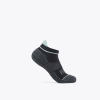


How I picked the best running socks of 2026
When it comes to finding the best running socks, personal preference plays a big role. That said, the experts I spoke with agreed there are certain things that everyone should keep in mind — including fabric, features, and cuts most likely to protect and support your feet during a run. Here is their guidance on those factors.
- Fabric: “You want a sock to help wick away any sweat you build up while running, to increase ventilation, and protect your feet and toes from rubbing and chafing,” says Steve Mura, the Manager of Runner Training & Education for New York Road Runners. Look for socks made with a fabric blend of Merino wool or synthetic fibers like nylon, spandex, polyester, and lycra — all of which can help wick away moisture. Whatever you do, our experts advise staying away from socks with a high percentage of cotton, which absorbs moisture. “You’re going to be uncomfortable because your foot is going to be wet and you may also end up falling prey to skin and nail infections from running with stagnant, wet material on your foot,” says Dr. Adenike Sonaike, DPM, a podiatrist and Medical Director with Baker Street Health in Motion, practicing in New York and New Jersey.
- Compression: Running socks with some level of compression can help prevent mid-run foot swelling (and the subsequent blisters and chafing that can cause). “Compression is also helpful for people who have certain foot conditions like plantar fasciitis or any type of Morton’s neuroma,” says Grant. “It can help alleviate some of that pain and pressure.” Look for socks with compression in the arch and ankle.
- Cut: The best cut for running socks mostly comes down to personal preference, but more fabric can deliver more benefits. Calf socks can help support runners with shin splints while crew socks with mild compression can support ankle stability. If you prefer a low-cut ankle sock, look for a version with a blister tab to protect chafing around the back of your foot.
Related

Want more from NBC Select? Sign up for our newsletter, The Selection, and shop smarter.
The best running socks of 2026

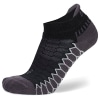
Sonaike says Balega’s running socks are one of the more technically advanced options on the market. “They studied runner’s biomechanics and created socks to support that,” she says. These socks have extra compression at the midfoot for arch support and a seamless, reinforced toe, according to the brand.

“These are the softest, most highly cushioned socks I own,” says NBC Select reporter Zoe Malin, who runs between 28 and 35 miles per week. “They’re not super thick, so they don’t make my shoes feel tighter, and they never make my feet hot, even in the summer. I especially love wearing these socks on long runs when the bottoms of my feet tend to feel the most achy. The extra cushioning really comes in handy when I’m getting up there in terms of mileage.”

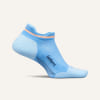
All of Feetures’ socks are designed for an anatomical fit — i.e. socks specific to the right and left foot — and you can really feel the extra snugness. When I ran in this pair for the first time, I appreciated the total lack of bunching or slipping as well as the softness and the mesh weave that kept my feet cool. In addition to the functional features including a cushioned blister tab, targeted arch compression, and seamless toe and heel design, Sonaike also likes these for their aesthetics. “They’re low profile so they fit really nicely into sneakers,” she says.

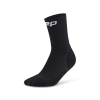
For full compression, Sonaike recommends Cep socks, which come in various cuts and weights to tailor to your personal preferences. (There’s even a reflective pair for night runs.) If you’re new to compression, these are a great place to start. They’re well-priced and moderately cushioned for extra comfort. The polyamide and spandex blend is not only moisture-wicking, but coated with an antimicrobial silver solution to inhibit the growth of bacteria and odors, according to the brand.

For a wide calf compression option, Dr. Priya Parthasarathy, DPM, a podiatrist in Silver Spring, Maryland recommends Wellow’s compression socks. While not specifically designed for running, they still check off many of our experts’ top recommendations since they’re woven from moisture-wicking fabric and have a seamless toe and heel design. The knee-length design is also ideal for runners dealing with shin splints.

Bombas’ running ankle socks have light compression and a tab to prevent blisters from forming on your heel. Parthasarathy says they are a favorite because they have just the right level of light cushioning and breathability. They also have a seamless toe design for comfort.

“These socks are marketed for hiking and trail running, but I’ve also used them for road running and cycling,” says NBC Select reporter Harry Rabinowitz, who typically bike rides about 10 miles per week. “The reason I love them is the mix of fabric: just enough Merino wool to be warm, but not so much that they feel itchy or uncomfortable (since wool usually bothers my skin). They’re slightly cushioned and compressive, but no so much so that I have to think about which shoes I pair them with. They’re machine washable and dryable, though sometimes I hang dry them, as they’re very expensive socks that I want to last for years.”

Wrightsock’s CoolMesh Quarter socks provide light compression for travel, support for hiking and breathability for running, according to the brand. “They’re very breathable, specifically for the summer,” says Sonaike. Compression in the arch helps prevent swelling and slipping and a unique double-layer design helps absorb friction between your shoe and your foot to prevent blisters.

Parathasarathy recommends Hoka’s run socks for their “really nice and snug” fit. She also likes the seamless toe design for patients to prevent blisters and toenail loss. The socks have extra compression at midfoot for arch support and reflective detailing at the back.

For cold-weather runs, Sonaike likes Smartwool’s running socks, which come in a variety of cuts. “They’re a thin merino wool blend and have specific padding around the toe and the heel [for added comfort],” she says. In addition to keeping your feet warm in colder temperatures, merino wool also does an excellent job at keeping feet cool in the heat, making these a versatile year-round pair.
Related

How to shop for running socks
To find the best running socks, think about your personal preferences — including the cut and level of cushioning. To help guide you, experts recommend the following:
Fabric
Choosing a synthetic or wool-blend sock is about more than just temperature and moisture regulation. It might also help prevent foot infections. “Because cotton retains moisture, it increases your risk of blisters,” says Grant. “Having moisture inside a running shoe for prolonged periods can also increase your risk of even developing athlete’s feet or fungus.”
Compression
All three doctors I spoke to for this story noted the importance of compression for running socks in helping to reduce swelling and pain. But what’s the ideal level of compression? It’s a matter of personal preference, says Grant, but for most runners without medical conditions affecting circulation, light compression is enough.
Cut
When deciding the best cut for your personal needs, Grant recommends considering your pressure points. Are you prone to blisters on the back of the heel? Ankle socks or no-show socks with blister tabs are safe bets. Are you prone to slippage from your socks? You may want to opt for a taller crew sock. If you’re battling shin splints, knee high compression socks can provide added support.
Temperature control
The level of cushioning in a running sock will affect its temperature control ability, says Grant. Ultrathin socks can actually make your feet sweatier as they’re less able to wick moisture and that can cause cold feet.
Frequently asked questions
There isn’t an exact timeline for replacing your running socks. Instead, keep an eye out for clear signs of wear and tear. If you see holes or fabric that has worn thin or notice your socks starting to bunch or sag, it’s time to toss them, says Sonaike.
Even highly rated running socks don’t work for everyone. If you notice your feet are overheating, you’re getting blisters or the fit just doesn’t feel quite right, you should stop wearing your socks and look for a new pair, says Sonaike.
Meet our experts
At NBC Select, we work with experts who have specialized knowledge and authority based on relevant training and/or experience. We also take steps to ensure all expert advice and recommendations are made independently and without undisclosed financial conflicts of interest.
- Dr. Priya Parthasarathy, DPM, is a podiatrist based in Silver Spring, Maryland. She’s a spokesperson for the American Podiatric Medical Association and practices with the U.S. Foot and Ankle Specialists, specializing in general foot and ankle care, foot pain, and sports medicine.
- Dr. Adenike Sonaike, DPM, is a podiatrist and Medical Director with Baker Street Health in Motion, practicing in New York and New Jersey. She specializes in general foot and ankle care, sports medicine, tendon health, and biomechanics.
- Dr. Lori Grant, MD, is a board-certified foot and ankle surgeon at Orlando Health who specializes in the medical and surgical treatment of all foot and ankle conditions including wound care, bunions, and sports-related injuries.
- Steve Mura is the Manager of Runner Training & Education for New York Road Runners. He is an RRCA and VDot02 certified coach and has coached hundreds of runners in person and online each year.
Why trust NBC Select?
Macaela MacKenzie is a journalist and former Glamour editor who has covered fitness and wellness for over a decade. For this article, MacKenzie spoke to three podiatrists and a trainer for New York Road Runners. She also drew on her personal experience as a distance runner.
Bethany Heitman is a contributing editor at NBC Select and a journalist who regularly covers beauty, home and lifestyle. She has recently written about neck creams, wide toe box sneakers and insoles.
Catch up on NBC Select’s in-depth coverage of tech and tools, wellness and more, and follow us on Facebook, Instagram, Twitter and TikTok to stay up to date.

