

People often talk about how important it is to apply sunscreen on your face, but your body is equally as important (but easily forgotten). Not only does wearing SPF products prevent skin cancer, which can develop on any part of your body, but it also protects against premature wrinkles, sun spots and sagging, experts say.
Here at NBC Select, we’ve tested hundreds of sunscreens on our faces and bodies, so we know which ones are actually worth trying. Below, I gathered our favorite body sunscreens that we’ve tested, paying special attention to how well they protected our skin from the sun and how they felt and looked after applying them.
 Best spray sunscreen$11.19$18.99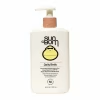


Related

Want more from NBC Select? Sign up for our newsletter, The Selection, and shop smarter.
The best body sunscreens of 2026
Best overall

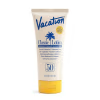
This SPF lotion has broad-spectrum protection against UVA and UVB rays and a blend of coconut oil, aloe vera and niacinamide to hydrate and even out your skin tone.
“I have pale skin and burn pretty easily, but I also love the beach. So, I’ve probably tested hundreds of body sunscreens throughout my life. Right now, my favorite is Vacation’s SPF 50 body lotion because it smells absolutely amazing, glides on easily, doesn’t leave a white cast and is totally safe for my acne-prone skin,” says NBC Select associate social media editor Caitlin Cusack. “I recently brought this to Miami and I left without any burns.”
Plus, even though the bottle is small, a little goes a long way, she says. Its viral, summer-friendly scent has notes of coconut, banana and pool water.

Best spray sunscreen

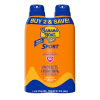
This Banana Boat spray sunscreen is a favorite of senior editor Shalwah Evans, who says you can always find a bottle in her home. “Both my spouse and I love this; we use the small travel version when we take trips and one bottle (each) gets us through an entire trip,” says Evans. “Because it’s a spray I can put it on hard to reach spots without his help, and it never leaves residue on clothes.”
It’s also a favorite of NBC Select reporter Zoe Malin, who uses it when she’s running outdoors. “It dries quickly and never feels thick or grimy on my skin, plus it dries clear, which is super important. Creamy white options often run as I start sweating, but this one never does,” she says. “I’m also very sensitive to scents, and this one doesn’t have that sunscreen smell that makes me nauseous even thinking about it.”
Evans also prefers this spray sunscreen because it’s easy to reapply when she’s sightseeing on vacation and running errands while at home.
Best budget pick

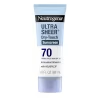
This chemical sunscreen blends in nicely without leaving a white cast and a little goes a long way, says NBC Select commerce editor Cory Fernandez. This also comes recommended by Dr. Nkem Ugonabo, a board-certified dermatologist at UnionDerm in New York City, who likes the lower price point and gentle formula compared to other chemical sunscreens.
“My best friend recommended this sunscreen to me, and I have been using it since (more than 5 years),” says NBC Select reporter Harry Rabinowitz, who is also a fan. “It doesn’t feel too oily, leave streaks or cost a fortune.” It has a sheer finish and the flat-shaped bottle doesn’t take up a lot of space in your bag while you’re traveling, says Fernandez.
Best for sensitive skin

Blue Lizard’s mineral sunscreen is one of our favorite expert-recommended Australian sunscreens because it offers great protection for active, outdoorsy types and is gentle enough for sensitive skin. The caps of the brand’s bottles and tubes also have a unique advantage: They change color when they’re exposed to harmful UV, allowing you to keep them protected and stable. (According to the brand, excess heat and sunlight can inadvertently break down sunscreen formulas.)

Best scented

Malin says this is the best smelling body sunscreen she has ever used. “When I apply it in public, strangers have literally turned around and asked me what it is because it smells that good,” she says. The smell isn’t overpowering though; it has a light vanilla and coconut scent that’s reminiscent of a piña colada, says Malin. “It’s very lightweight and even though it has fragrance (which I’m usually sensitive to), I find it non-irritating,” she says.
Best for dry skin

I’m a huge fan of Sun Bum, especially its Daily 50 Face Lotion for the dry skin on my face. If you’re like me and your dull, dry skin extends to your body, consider this SPF body lotion, which has vitamin E to moisturize and vitamin C to brighten your skin. It’s lightweight, so it glides on and absorbs like your usual body lotion, and the tropical scent is great (though maybe a bit overpowering for some).
It’s also a favorite of NBC Select associate SEO reporter Ashley Morris: “I usually opt for a spray sunscreen when it comes to body protection in the summertime, but this lotion from Sun Bum surprised me,” she says. “I usually find that sunscreen body lotions aren’t actually moisturizing, but this one kept my skin from looking dry and dehydrated all throughout my beach days (I reapplied a few times throughout the day as well).”

Best sheer

I grew up in Florida, so whenever I visit home, I’m applying this Coola spray sunscreen to protect my skin from the harsh sun at the beach or pool. The spray dries completely clear, so I don’t have to worry about annoying streaks or stains on my clothes and bathing suit.
Though this one is fragrance-free (which is great for those with sensitive skin), I recently tried Coola’s California Summers scent in partnership with candle brand Voluspa — the brand sent me a bottle — and it leaves the most incredible fragrance I’ve ever smelled in a sunscreen.
Best SPF oil

“The brand sent me this body sunscreen oil about two years ago, and I’ve repurchased it at least three times since,” says Evans. “I like that I can use this in lieu of body lotion, unlike most other body sunscreens where I still feel like I need to put on moisturizer first. The best part is that it gives my body a glow, so I don’t need to put bronzer on my shoulders, clavicle or legs like I normally do for special occasions.” Even though it’s an oil, this SPF doesn’t feel sticky or make clothes greasy once it dries down, says Evans. Plus, it smells amazing.

Most hydrating

This was NBC Select senior editor Nikki Brown’s go-to body sunscreen all last summer. “I typically go for a fragrance-free formula, but because this is a spray (the quickest and easiest to apply, in my opinion), I decided to give it a shot,” she says. “The vanilla fragrance is great and not too overpowering. I also appreciate that the applicator never malfunctions and the product always comes out nice and even.”
The spray has several hydrating and soothing ingredients, including aloe vera, avocado oil, vitamin E, lavender extract and green tea extract.
Best for runners

For runners, cyclists, golfers and others who spend their days outdoors, consider this noncomedogenic formula for face and body, which uses a blend of chemical and mineral filters. “This is a great sunscreen for people who are active,” says Evans. The oil-free, unscented lotion is water-resistant and won’t drip into your eyes when you sweat, according to EltaMD.

Most lightweight

Dune’s Bod Guard is an NBC Select Wellness Award winner because it’s lightweight and quickly blends into skin, according to our editors who tested the sunscreen. It also doesn’t leave a white cast; better yet, it provides a natural-looking glow. The sunscreen has ingredients like vitamin E and hibiscus fruit extract that moisturize skin, according to the brand.
How I picked the best sunscreens
These are the top factors that my experts recommend keeping in mind when shopping for a body sunscreen:
- Type: There are two main types of sunscreen: mineral and chemical. Mineral sunscreens (also called physical sunscreens) create a protective barrier that blocks UV light from reaching your skin. Chemical sunscreens absorb the UV rays, convert them into heat and release them from your skin, which makes them less harmful, according to my experts. They each have their benefits: Since mineral sunscreens sit on the surface of the skin, they start protecting immediately and they’re usually less irritating and better for sensitive or reactive skin. Meanwhile, chemical sunscreens are usually easier to blend and don’t leave a white cast, which is great for darker skin tones. “Both forms are safe. However, for pregnant women, people with sensitive skin, or children, stick with mineral sunscreen,” says Ugonabo.
- SPF rating: Sun protection factor, or SPF, measures your level of protection against a sunburn. Though no sunscreen can block 100 percent of the sun’s UV rays, you should look for sunscreens with a minimum SPF 30 or higher, according to the American Academy of Dermatology.
- Broad-spectrum protection: In general, always look for a sunscreen labeled “broad spectrum,” which means that it protects your skin from both UVA rays and UVB rays. UVA rays are the ones that cause signs of aging, while UVB rays contribute to sunburns and skin cancer, so it’s essential to have both, experts say.
- Ingredients and skin type: If you have dry skin, look for cream formulations with ceramides, squalane or glycerin to help hydrate your skin, says Dr. Robyn Gmyrek, a board-certified dermatologist at UnionDerm in New York City. If you have sensitive skin, look for zinc oxide or titanium dioxide, which are mineral filters that are less likely to cause irritation.
- Water resistance: Look for a formula that’s water-resistant for 40 to 80 minutes, especially if you’ll be sweating or swimming. But keep in mind no sunscreen is waterproof, says Gmyrek. In other words, reapplication is a must no matter what.
How do you determine the best sunscreen for your skin type?
Your skin type will determine how you shop for body sunscreen. Here’s what experts say:
- Sensitive skin: Look for mineral-based sunscreens with zinc oxide and titanium dioxide, which are less likely to cause irritation or allergic reactions.
- Dry skin: Mineral- and chemical-based sunscreens are both fine to use, but choose a cream formulation with ceramides, squalane and/or glycerin to help hydrate your skin.
- Oily skin: Consider gel or lotion formulations (either mineral- or chemical-based), which are lighter and less likely to clog pores. However, most SPF lotions and gels are chemical-based because mineral sunscreens tend to be thicker, says Gmyrek.
- Mature skin: This is usually a drier skin type, so look for a thicker cream with hydrating ingredients. People with mature skin also need a good UVA blocker, so consider antioxidants like niacinamide, vitamin C and vitamin E.
Frequently asked questions
You should apply at least one ounce (about a shot glass full) on your entire body, says Gmyrek. Roughly, apply one teaspoon to each arm and leg, one teaspoon to the back and one teaspoon to the chest and abdomen, says Dr. Amy McMichael, a board-certified dermatologist and professor of dermatology at Wake Forest University School of Medicine.
Reapply your sunscreen every two hours while you’re outdoors and after swimming or heavy sweating, says Ugonabo.
Though you technically can use a sunscreen meant for the face on your body and vice versa, experts recommend sticking to the areas each product is intended for. Body sunscreens tend to come in larger packaging since they cover more surface area and are usually thicker than face sunscreens. However, that means they can more easily clog pores on your face and may not be suitable for acne-prone skin, experts say.
Facial sunscreens, on the other hand, usually have a thinner texture, are labeled as noncomedogenic (meaning it won’t clog pores) and have added moisturizers and antioxidants, which can make them better for the delicate skin on your face, says Gmyrek. Sunscreens formulated for the face may also have less fragrance and aren’t as water-resistant as body sunscreens, experts say.
Yes, spray sunscreens are effective as long as you’re applying them correctly, and they’re usually recommended for quick and easy application (especially for kids). However, many people don’t spray enough to adequately protect their skin from the sun, which is why many dermatologists recommend SPF lotions to better gauge how much and where you’re applying it on your body.
“Sprays are my least favorite type because most people do not spray themselves as evenly or as thickly as they should,” says Gmyrek. “The wind can also take the spray away from the body when applying it outside.“ Ugonabo recommends using sticks, sprays and powders to reapply or on top of your lotion SPF because there’s no reliable way to really make sure you are getting an effective amount of each.
To apply spray sunscreens the right way, hold the bottle’s nozzle about three to four inches away from your skin and spray multiple passes across each part of your body. Two to three times per arm and three to four times per leg is a good rule of thumb, experts say. Between each spray, rub the sunscreen into your skin until it’s entirely blended in.
Related

Meet our experts
At NBC Select, we work with experts who have specialized knowledge and authority based on relevant training and/or experience. We also take steps to ensure all expert advice and recommendations are made independently and without undisclosed financial conflicts of interest.
- Dr. Nkem Ugonabo is a board-certified dermatologist at UnionDerm in New York City.
- Dr. Robyn Gmyrek is a board-certified dermatologist at UnionDerm in New York City.
- Dr. Amy McMichael is board-certified dermatologist and professor of dermatology at Wake Forest University School of Medicine.
Why trust NBC Select?
I’m an updates editor at NBC Select who has covered beauty and personal care for more than five years. I’ve covered several sunscreen topics for the site, including sunscreen for kids, oily skin and sensitive skin. For this article, I compiled body sunscreens tested and loved by NBC Select editors, as well as expert-recommended guidance to consider when shopping.
Catch up on NBC Select’s in-depth coverage of tech and tools, wellness and more, and follow us on Facebook, Instagram, Twitter and TikTok to stay up to date.


