

For many, spring means warm weather, longer sunlight hours and the draw to organize your space. But it’s also when pests like fruit flies, mosquitoes and moths find their way into homes. While moths aren’t as common as flies, they’re equally tiring to deal with, and if you don’t have the right solutions to deal with them (or measures to keep them out in the first place) it can be costly.
Most moth problems stem from moths “entering from the outdoors and pantry moths that are brought inside unintentionally,” says Ian Williams, technical services manager at Orkin. They’re attracted to light sources and come through cracked windows or doors; some gravitate to dry goods or natural fabrics, he says.
If you’ve been dealing with a moth problem or want to get ahead of it as you look forward to summer, keep reading. Williams, along with another pest control expert, explain how to get rid of moths, how to keep them out of your home, and the difference between the types of moths (yes, it does matter) so you’ll know what you’re dealing with if they get into your home. Plus, I share a list of the best moth traps and repellants using their guidance.
 Best for pantry moths$17.97$19.97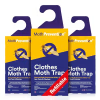


Related

Want more from NBC Select? Sign up for our newsletter, The Selection, and shop smarter.
Top-rated products for getting rid of moths
All of the products below have at least a four-star average rating from 500 reviews or more on Amazon or at least 100 reviews at a separate retailer.

These traps from MothPrevention are great for getting rid of fabric moths, and they’re made with a hook at the top to easily hang in your closet. They’re odorless, which is a big plus since you don’t want a stinky trap smell to get into your clothes, plus they’re pet safe (in case they somehow end up on the floor) and last for months, according to the brand.

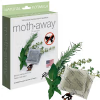
Made with an herbal formula, these sachets repel moths with their minty scent. Each sachet is about the size of a tea bag and has a blend of peppermint, rosemary, thyme, and cloves, which many shoppers say has a pleasant smell that doesn’t get into your stuff. Place them beside folded clothes, in storage bins with blankets and towels or put them in wardrobes.

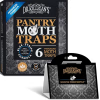
These traps will be your best defense against pantry moths that infest dry, shelf-stable foods. The tent traps have an adhesive blue stripe with pheromones to attract moths. And since they’re odorless, you don’t have to worry about them making your pantry smell.

These blocks are made from red cedar wood, which has a strong smell that repels moths. You can place them in drawers, storage bins, shoes, closets and more to keep adult moths out of your clothes. The brand also sells blocks attached to hooks for closets, cedar rings and balls made from cedar wood that you can put in drawers and vacuum storage bags. Note: This is a repellant, not an insecticide, so the blocks are best to employ after you’ve already used a moth eradicator.

This product is one of the most popular tried-and-true options for getting rid of fabric moths, which often burrow in clothing and bedding and can damage them. The active ingredient in these moth balls is p-Dichlorobenzene, which kills moths, their eggs and larvae, as well as carpet beetles, according to the brand. They work best in enclosed spaces like drawers and closets, or storage bags and bins, though shoppers say the smell isn’t the most pleasant.

I also included this plug-in device in my story about the best treatments for fruit flies, which some of our editors use themselves. It’s a plug-in that emits a blue light that attracts moths and other flying insects, with adhesive strips that trap them. Each strip lasts for up to 30 days, according to the brand. Safer Home also recommends using them around plants, kitchens and outside windows.
How I picked the best products for getting rid of moths
There are a few important factors when finding the best methods for getting rid of moths. Based on expert guidance, here’s what I considered when making this list above:
- Moth type: Moths such as the ones described above are known as fabric moths, Over time, they can damage clothing and other materials. Other common types of moths are pantry moths, which also prefer dark areas but are attracted to dry foods like grains (flour, pasta, oats) and pet food, according to Williams. To address this, I included products made for pantry moths that are safe to put near your food and attract adult moths with pheromone strips (as opposed to scents that humans can immediately smell).
- Source: Similar to many flying insects, moths are attracted to lights, but they enter homes through small cracks, crevices and open doors or windows. “Once inside, they may lay eggs in dark, undisturbed areas like closets and attics,” says Williams. This is why they’re common in closets, drawers and other areas with clothes and natural fabrics that lay dormant or undisturbed for a long time, he says. With this in mind, I included products that address moths both in clothes and ones that lay eggs in other areas of the home.
What are the best treatments for different types of moths?
While there are hundreds of thousands moth species, they fall under different types. “Moth control isn’t one-size-fits-all, as different species are attracted to different things and therefore require different treatment approaches,” says Shannon Sked, entomologist and national technical director at Orkin.
Fabric moths, pantry moths, light-attracted moths (and though less often, carpet moths) are the ones that typically invade homes. Here’s how to deal with them if they get into your space.
How to get rid of fabric moths?
Fabric moths (also known as clothes moths) are “commonly found in closets or other indoor areas with access to natural fibers like wool and silk,” says Sked. For this, Sked recommends using pheromone traps, such as the MothPrevention Powerful Moth Traps, which use female moth pheromones to trap male moths and prevent them from reproducing. Additionally, products such as moth balls, cedar and herbal treatments repel moths rather than kill or trap them.
How to get rid of pantry moths?
“Pantry moths enter homes through infested food items,” says Sked. “Homeowners should start by discarding contaminated dry goods and thoroughly cleaning the pantry, including shelves, corners and crevices.” Then, use products made for food areas like, Dr. Killigan’s Premium Double Potent Pantry Moth Traps, which use adhesive strips with pheromones on them.
They typically work by drawing the moths to the trap using pheromones, then sticking them to the trap and preventing reproduction. You may also want to put dry foods in airtight containers so that moths don’t have anywhere to lay eggs.
How to get rid of light-attracted moths?
While these tend to be less of a problem when it comes to infestation, according to Sked, there are ways to repel light-attracted moths. “Reducing outdoor lighting, using warm colored LED lights (under 3,000 Kelvin) and sealing gaps around windows and doors can help reduce their attraction to a home as well as help prevent them from getting inside,” says Sked.
What are the different ways to get rid of moths?
Most treatments for moths are either repellents, traps or sprays that kill moths. Repellents use smells to ward off moths, traps typically use female moth pheromones to trap male moths and stop reproduction, and some sprays kill moths and larvae.
Frequently asked questions
“The most effective way to eliminate moths is to identify the source of the infestation and remove it,” says Williams. Do a thorough cleaning of anywhere that is dark and where clothes are stored and aren’t moved often or develop webs. For pantry moths, this means throwing out any infested foods or foods that have a foul smell.
Additionally, Williams recommends using heat to launder clothes and kill moths (this is also important with thrifted clothes, according to Williams.)
To get rid of moths permanently you can either do a thorough clean of your kitchen pantry, closets and drawers to identify the source and/or consider contacting professional pest control services for severe cases. Professionals can do inspections and sanitation to adult moths and the eggs and larvae, which are what damage clothes and fabrics the most, according to Gil Bloom, an associate certified entomologist and president of Standard Pest Management.
Scented materials such as cedar wood and herbs repel moths and prevent them from reproducing. Bloom also recommends “using an insecticide and insect growth regulator to disrupt the life cycle,” which prevents larvae from eating clothes and food.
Meet our pest control experts
At NBC Select, we work with experts who have specialized knowledge and authority based on relevant training and/or experience. We also take steps to ensure all expert advice and recommendations are made independently and without undisclosed financial conflicts of interest.
- Ian Williams is the technical services manager at pest control brand Orkin.
- Shannon Sked is an entomologist and national technical director at Orkin
- Gil Bloom is an associate certified entomologist and the president of pest control company Standard Pest Management.
Why trust NBC Select?
I’m a commerce editor at NBC Select, where I write about deals, sales, home and kitchen appliances and cleaning. I’ve written many guides on how to clean dishwashers, hardwood floors, coffee makers, windows and more. For this story, I spoke with pest control experts for their guidance on how to get rid of moths and included a list of top-rated moth repellents, also based on their guidance.
Catch up on NBC Select’s in-depth coverage of tech and tools, wellness and more, and follow us on Facebook, Instagram, Twitter and TikTok to stay up to date.


