

It’s a pet parent’s worst nightmare: fleas. These tiny bugs make cats and dogs uncomfortable, and once an infestation starts, it can be very hard to stop. Getting rid of fleas is a three-step process, according to the veterinarians I talked to: diagnosis, treatment and prevention, and cleaning. Read on to learn exactly what each step involves, products that help you along the way and why vets recommend giving your pet preventative medication year round.

 Best flea topical for cats$undefined$41.49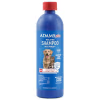


Related

Want more from NBC Selected? Sign up for our newsletter, The Selection, and shop smarter.
The best flea treatment and prevention products
Tackling a flea problem involves three steps: diagnosis, treatment and prevention, and cleaning. It’s crucial to approach each one carefully: Cutting corners increases your pet’s chances of reinfection and leaves your home vulnerable to repeated infestation, says Dr. Jennifer Garner, a veterinarian at Chewy Vet Care. (Ed’s note: The inclusion of products sold by Chewy in this article was made independently of Garner.) I walk you through what happens during each step below, but first, here are the products you’ll need to successfully complete them.
A note about oral and topical flea preventatives, as well as flea collars: I added options to this list that meet expert guidance; are highly-rated; act as preventatives and treatments; protect against multiple types of parasites; and are EPA- or FDA-approved. A handful of flea products are sold over-the-counter, but many are only available via a prescription, so talk to your vet.
Best flea comb

A flea comb like this one is your best friend when it comes to diagnosing fleas. The fine-toothed comb helps you part your pet’s fur to better see their skin and hair follicles, revealing fleas or flea dirt (a.k.a. flea feces). That said, diagnosing your pet with fleas may also require a trip to the vet, so don’t hesitate to make an appointment. In addition to removing fleas, flea eggs and other debris like flea dirt from pets’ hair, this comb doubles as a grooming tool for dogs and cats.
Best flea chew for dogs

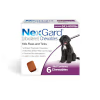
NBC Selected updates editor Mili Godio started giving Bella, her now 7-year old, 15-pound havachon, these beef-flavored chews when she was four months old. I’ve also given them to Mabel, my 1-year old, 9-pound mutt, since she was two months old. “Bella is constantly running outside and going to dog parks, and I’ve never had a flea problem,” says Godio. “I love that these chews are so easy to give her every month. I act like they’re a treat, so she actually gets excited to eat them.” NexGard’s bite-sized chews are FDA-approved to kill adult fleas before they can lay eggs, as well as kill black-legged ticks. (This flea chew requires a prescription from your veterinarian, which the online retailer you purchase from will collect at checkout.)
Best flea chews for cats

Credelio’s chews kill fleas and black-legged ticks, and you have to give them to your pet with food. The chews are small in size so they’re easy for cats to eat. They’re also made with yeast and vanilla to give them an appealing taste. (This flea chew requires a prescription from your veterinarian, which the online retailer you purchase from will collect at checkout.)
Best flea topical for dogs

Frontline Plus’ unscented topical solution kills adult fleas, flea eggs and flea larvae, as well as chewing lice and ticks. It’s available in packs of three, six or eight treatments. The solution comes in pre-measured applicators.
Best flea topical for cats

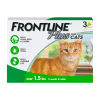
Frontline Plus also offers an unscented topical solution for cats. It kills adult fleas, flea eggs and flea larvae, as well as ticks and chewing lice. The solution comes in pre-measured applications, and it’s available in packs of three, six, eight or 12 treatments.
Best flea collar for dogs

Seresto’s dog collar protects against fleas and flea larvae, as well as ticks and lice. The non-greasy, odorless collar is designed with a safety release mechanism that allows it to widen and break off pets’ necks if pulled hard enough.
Best flea collar for cats

Seresto’s cat collar protects against fleas, flea larvae and ticks. The collar is designed with a safety release mechanism that allows it to widen and break off pets’ necks if pulled hard enough.
Best flea shampoo

“Flea shampoos work to temporarily decontaminate the surface of your pet, but they don’t offer protection,” says Dr. Douglas Kratt, a small-animal practitioner at Central Animal Hospital in Wisconsin. “They will help get rid of flea dirt, but some of the chemicals used in flea shampoos can be irritating to pets’ skin.” Because of that, you shouldn’t use flea shampoo long-term.
This flea shampoo is made with ingredients that help it kill adult fleas, flea eggs, flea larvae, ticks and lice. It also has soothing aloe vera, lanolin, coconut extract and oatmeal in its formula to make it gentle on sensitive skin. The lightly scented flea shampoo leaves your pet’s coat shiny and soft. You only need to use about 1 ⅓ tablespoons for every five pounds of your pet’s weight, and the brand recommends waiting about seven to 10 days between repeat shampoos, if necessary. Be sure not to get this product near your pets’ eyes.
Best flea spray cleaner

Cleaning is a whole-home operation when it comes to fleas, says Kratt, so a spray like this one comes in handy. You can use it on carpets, rugs, pet beds and furniture cushions, which are all areas you’ll need to disinfect. “Flea larvae hatch from eggs and then burrow deep into carpets and crevices in furniture where they are hard to access,” says Garner. She specifically recommends spraying the underside of rugs and cushions, which are common areas people miss. Don’t forget about hard surfaces, too, like baseboards and tile, wood or laminate floors. “If there’s crevices, eggs and fleas can get inside,” says Kratt.
Wondercide’s spray takes a natural approach to getting rid of fleas. Instead of hard chemicals, it uses plant-based ingredients to kill fleas, flea eggs and flea larvae upon contact, as well as repel and prevent them, according to the brand. The pet- and people-safe spray also works on ticks and mosquitoes.
Best carpet powder for fleas

Thoroughly vacuuming carpets, rugs and upholstery is a must since fleas burrow into fabric. Before doing so, you can spot-treat areas with this powder. It kills flea eggs, larvae and pupae, as well as adult fleas and brown dog ticks. The powder also deodorizes carpets to get rid of pet odors. It starts working within an hour of application, but the brand recommends waiting 24 hours before vacuuming.
After you vacuum, make sure you thoroughly clean the appliance to prevent flea eggs and larvae from surviving inside it. If they do, they can reinfect your home. “If your vacuum cleaner has a bag, you must take it outside to the garbage can immediately and tie it up,” says Kratt. “If your vacuum is bagless, you must empty it and spray the internal portion of your canister with a cleanser.”
Best laundry detergent for fleas

“Any bedding, towels, toy or other washable objects your pet regularly comes in contact with should be washed in soapy hot water and dried in a hot dryer,” says Garner. Standard laundry detergent works well, but this scent-free solution is made with ingredients that effectively get rid of fleas to give you extra peace of mind. It also helps eliminate parasites like bed bugs, lice, ticks and mites. You can use the solution with or without laundry detergent.
How to get rid of fleas, step-by-step
Here’s everything you need to know about each step of the flea treatment and prevention process. As you move through them, regularly update your veterinarian. They’re the expert when it comes to your pet’s health and can make recommendations as needed.
Step 1: Diagnose your pet with fleas
Fleas are tiny bugs, but you can see them with the naked eye, especially in cats with light skin or fur, says Garner. They’re usually smaller than a grain of rice (one to three millimeters in length), have a flat body and are brown to reddish-brown in color. But seeing fleas on your pet or in your home isn’t always a guarantee, so it’s important to know what other signs to look for.
How can you tell if your pet has fleas?
- Increased itching: Flea bites are sharp and painful, and their salivary glands give off a substance that’s irritating to pets. Some are even allergic to it. In response, your cat or dog may be more itchy than usual — and we’re not talking about casual scratching. Pets with fleas tend to aggressively and consistently itch, so much so that they can create a rash, says Dr. Mitzi D. Clark, a veterinarian and assistant clinical professor at Cornell University’s College of Veterinary Medicine.
- Excessive grooming: Think constant licking and biting at skin, which is most common with cats, says Clark. “Cats are fastidious groomers and will often lick or chew off any fleas they find,” she says. If you notice your cat overgrooming, run your fingers through their hair and look for small, crusty bumps on their skin, as well as hair loss, especially toward the base of the tail and their backside.
- Presence of flea dirt: Fleas move quickly through your pets’ fur, so it’s usually easier to look for flea dirt, which is flea feces. It looks like black pepper, says Garner. You’ll find black specks on your pet’s coat, as well as anywhere they sit, like on a bed or in a cat tree.
- Flea bites on your body: Yes, fleas can bite you, too. They prefer pets to humans, but if they can’t access a pet, they tend to bite humans’ legs, feet and ankles, though you can get bit anywhere. On human skin, flea bites look like little red dots. They’re usually surrounded by redness and can appear in clusters, experts told me.
- Fleas on hair follicles: Seeing a flea on your pet gives you a definitive diagnosis. “If you see one flea, it’s like the tip of the iceberg,” says Kratt. “One flea can lay thousands of eggs in a fairly short period of time.”
How do you use a flea comb on pets?
As I mentioned above, a flea comb is your best friend during diagnosis. Use one properly by following these steps.
- Use the comb to part your pet’s hair down the middle of their back. Look closely — you may see fleas scurrying away, says Garner. Also run the comb through hair on your pet’s face, neck and the base of their tail, which are areas that fleas commonly gather. Check thinly furred areas like the belly and groin, too.
- If you don’t see any fleas, look for flea dirt. If you can’t tell whether you’re seeing flea dirt or regular dirt, use the flea comb to gather up the pepper-looking substance, put some on a white paper towel and spray it with water. “Wet flea dirt will turn red or reddish-brown as it’s basically digested blood,” says Garner.
- Keep a bowl of soapy water or isopropyl alcohol next to you while combing your pet’s fur. Clean your comb off in it and dispose of fleas you find into it. Fleas get trapped in the liquid, which prevents them from jumping back onto you or your pet. Then, pour the flea-filled liquid down the drain, says Kratt.
Step 2: Treatment and prevention
Once your pet is diagnosed with fleas, immediately start treating them and preventing future infestations. Luckily, you can do both at the same time. Some oral and topical medications, as well as medicated collars, simultaneously kill and repel fleas to prevent another outbreak. Many of these products also protect pets against other parasites, like ticks, lice, biting flies and mosquitos.
There are dozens of medications available, and choosing the right one involves considering factors like their species, breed, size, age, health conditions, lifestyle and home environment, as well as any medications they may be taking. Because of this, it’s important to consult your vet.
How to shop for and administer flea preventatives for pets
- Buy a product that aligns with the type of pet you have. Never give your cat something that’s formulated for dogs, or vice versa, says Garner. If a product is safe for both species, it will explicitly say so.
- Match a flea product to your pet’s age and size. Many are labeled with a weight range and indicate what ages it’s safe for. Exercise extra caution with very old and very young pets, as well as those that are pregnant and/or nursing.
- Look for EPA- and FDA- approval statements. Some flea products are regulated by the Environmental Protection Agency, while others are regulated by the U.S. Food and Drug Administration. Medications and pesticides must meet U.S. government-required safety standards before they’re sold, so look for an EPA or FDA approval statement and number somewhere on products’ packaging.
- Pay attention to active ingredients. Broad-spectrum flea products are typically made with two types of active ingredients: insecticides, which kill adult fleas, and insect growth regulators, which stop the development of flea eggs and larvae. The exact active ingredients used depend on the product and the type of pet it’s for — ingredient labels typically list all this information.
- Follow the directions and dosage recommendations exactly as listed on the product’s packaging.
- Check the expiration date on a product’s packaging before using it. If it’s expired, throw it out. The active ingredients in flea products lose their potency over time, so anything that’s expired may be ineffective, says Garner.
What are the different types of flea preventatives for pets?
Oral medications
Oral flea medications come as treat-like chews and pills. Your pet ingests the oral medication, which is made with chemicals that get transmitted to fleas when they bite skin, thus killing them.
Topical medications
Topical flea medications (also called spot-on medications) are sold as pre-dosed liquid solutions you apply to pets’ skin. It typically goes between their shoulder blades or along the spine so they can’t lick it off. Some topicals work by spreading through pets’ hair and the skin’s natural body oils: In this case, fleas die upon contact with your pet’s coat. Other topicals are absorbed by the skin and circulate through the bloodstream: In this case, fleas die when they bite your pet.
If you only have one pet in your household, flea topicals are a great option. But they’re tricky to use in multi-pet households. These medications can’t be ingested by pets, so vets recommend against using them if you have multiple cats that frequently groom each other. It’s also not a great idea to use flea topicals if you have cats and dogs in your household. Some chemicals in dog flea topicals are toxic to cats, so avoiding them is the safest option.
Flea collars
Flea collars sit around your pet’s neck and are infused with chemicals that kill and repel the pests. Over time, your pet’s hair and skin absorb the chemicals and distribute them across the body. Because of this, flea collars work through contact, meaning fleas don’t have to bite your pet in order to die, but you have to keep the flea collar on your pet at all times for it to work.
One of the most important factors to consider while shopping for a flea collar is whether it’s designed with a mechanism that unclasps if your pet gets it caught on something, says Kratt. If it’s not, it can become a choking hazard.
Step 3: Clean your home
Deep cleaning your home is a crucial part of the flea removal process, and it’s no small feat. The flea life cycle is 30 days long, so any eggs in your home will hatch in stages, says Garner. That means it might take a few months until your space is completely flea-free.
You can use products like those I included in the above list to clean your home, but you may want to consider professional extermination. Flea eggs are very hard to kill, and if you don’t clean your home thoroughly enough, you put yourself, your pet and your space at risk of reinfestation. Keep in mind that exterminators typically use very strong chemicals to get rid of fleas — since they’re often toxic to people and pets, you and your furry friends will have to vacate your home for a few days.
Regardless of what cleaners you use, follow the directions exactly as listed and ventilate rooms well while you’re disinfecting them, says Garner. Also, keep your pets away from areas you’re treating — some brands may even tell you to leave rooms for a specified period of time after applying their cleaning products.
Related

Frequently asked questions
Fleas are parasitic insects that feed on animal or human blood, says Garner. There are over 300 varieties of fleas in the U.S., but the one that commonly affects dogs and cats belongs to the genus Ctenocephalides, says Clark.
One of the reasons these pests are hard to get rid of is that they multiply quickly in an environment. Once an adult female flea attaches to your pet, she usually starts laying eggs within a day, says Kratt. She can lay as many as 50 eggs per day, and within two to 16 days, those eggs will hatch into larvae, which then grow into pupae — this is the cocoon stage, the last developmental stage before the adult flea emerges.
Fleas live in all parts of the country, and they thrive in hot, humid environments. But even in the winter, you’re not totally out of the woods since the cold encourages fleas to make their way inside your warm home. “Adult fleas find their hosts by detecting body heat, breathing and vibrations from moving,” says Garner.
That said, your pet can come into contact with fleas, eggs, larvae and pupae anywhere, including backyards, dog parks, vets, daycares and groomers. Dogs and cats can also contract fleas from another animal or person.
Fleas affect dogs and cats similarly, says Clark. In the best case scenario, they’re a minor nuisance and make your pet’s skin itchy and irritated until they’re treated. But in the worst case scenario, fleas can cause allergic reactions in pets, transmit life-threatening diseases and lead to severe illnesses.
Garner says flea allergy dermatitis, a skin disease, is one of the most common causes of extreme itching in cats and dogs, and may even lead to hair loss and scabbing. As for diseases and illnesses, fleas carry tapeworms and can spread Cat Scratch Disease, Mycoplasma Haemofelis, Typhus, the Hanta Virus and Plague. Fleas are particularly threatening to puppies and kittens, says Clark. If they feed on the animals’ blood as babies, it can cause anemia, which may become a life-long condition.
The best way to treat and prevent fleas in multi-pet households is to ensure that all animals take a broad-spectrum flea preventative. If one of your pets has fleas, it’s essential that you treat all the animals in your household, even if you’re not seeing active fleas on them, says Garner. “Those pets are at risk once the fleas start leaving their initial host,” she says. And if you treat one pet but not the others, there’s a much higher risk of reinfection.
All the vets I spoke to agree that yes, you should give indoor cats flea preventatives year round. Anyone who goes outside — pets and people alike — can bring fleas into the home and put indoor cats at risk. If indoor cats live with a dog, or frequently come into contact with dogs, their chances of encountering fleas increase, making it even more crucial that they’re on a preventative.
The chances of your pet getting fleas if they’re on a preventative is very low, as long as they’re taking the appropriate dosage according to the schedule the brand recommends, says Kratt. Fleas may land on your pet, however, so if you see one, don’t panic. Topical solutions and flea collars tend to act as repellents, but oral medications do not. Instead, oral medications kill fleas when they bite your pet, and since they tend to do so before they can lay eggs, you don’t need to worry, says Kratt.
If, for some reason, your pet has a case of fleas while on a preventative, be sure to call your vet immediately and contact the product’s manufacturer, says Kratt.
Yes, people can be bitten by fleas, just like their pets. “Fleas prefer animal hosts, but will spread to humans in an infested environment,” says Garner. People can also carry fleas on their person and transfer them to another human or animal, says Clark.
Meet our veterinary experts
At NBC Selected, we work with experts who have specialized knowledge and authority based on relevant training and/or experience. We also ensure that all expert advice and recommendations are made independently and with no undisclosed financial conflicts of interest.
- Dr. Jennifer Garner is a veterinarian at Chewy Vet Care. (Ed’s note: The inclusion of products sold by Chewy in this article was made independently of Garner.)
- Dr. Mitzi D. Clark is a veterinarian and assistant clinical professor at Cornell University’s College of Veterinary Medicine. She’s an expert in veterinary dermatology.
- Dr. Douglas Kratt is a small-animal practitioner at Central Animal Hospital in Wisconsin.
Why trust NBC Selected?
I’m a reporter at NBC Selected who has covered pets for over five years, including topics like kitten food, dog beds, cat toys, dog sunscreen and cat travel carriers. For this article, I interviewed three veterinarians about how to get rid of fleas and rounded up products that meet experts’ guidance. I have two cats and a dog, all of whom I give flea preventatives to, and I’ve also volunteered at animal shelters for years, plus previously ran a dog walking company.
Catch up on NBC Selected’s in-depth coverage of tech and tools, wellness and more, and follow us on Facebook, Instagram, Twitter and TikTok to stay up to date.


