

Chances are, you already know that wearing sunscreen on your face and body is an absolute must. But, according to experts, there is one crucial spot that most people miss: the top of the head. Your scalp is a high risk area when it comes to sun exposure — and if damage like skin cancer is found on the scalp, it can be a tricky area to treat, says Dr. Claire Wolinsky, a board-certified dermatologist at Spring Street Dermatology in New York City.
“Studies have shown that hair provides very little protection for your scalp, regardless of hair color,” adds board-certified dermatologist Dr. Michele Green. “So, it’s extra important to protect it with sunscreen or a UV-protective hat.”
While a hat works sometimes, it won’t always be practical to wear one. So, to help you shop for a scalp SPF, I consulted dermatologists about what to look for to ensure the top of your head stays protected.
 Best powder$undefined$69.00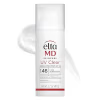


Related

Want more from NBC Select? Sign up for our newsletter, The Selection, and shop smarter.
The best scalp sunscreens
Best overall

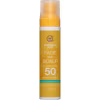
Intended to be used on both your face and scalp, this lightweight mist is one of our favorite Australian sunscreens. It has a SPF 50 and the nozzle dispels a fine, even mist. “I love using it on my scalp and part because it doesn’t leave my fine hair looking and feeling greasy and flat,” says NBC Select updates editor Mili Godio. “It also smells amazing.”
Best powder

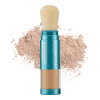
If you’re worried about your sunscreen leaving a white cast on your hair and scalp, consider this tinted sunscreen powder, which earned a spot in our guide to the best sunscreens for darker skin tones. Its broad-spectrum coverage can help protect against UV rays, infrared rays and high-energy visible light (blue light), experts say. It’s available in four shades — fair, medium, tan and deep — and you can dust it over your part and head or use it to touch-up your face makeup throughout the day, according to the brand.
Best lotion

This sunscreen is great for both face and scalp coverage, and it has the added benefit of correcting sun damage, including sun spots, says Dr. Jamie DeRosa, a double board-certified plastic and reconstructive surgeon. Not only does it protect the skin from UV rays, but it also has ingredients like squalane to restore moisture in the skin and antioxidants, including vitamins C and E, to help prevent free radical damage, says DeRosa.
Best spray

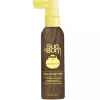
This spray sunscreen has a narrow nozzle at the top that makes it easy to apply the product on specific areas of your scalp, says Wolinksy. The broad-spectrum and water-resistant mist is suitable for all skin types because it’s noncomedogenic, meaning it won’t clog pores. Spray it four to six inches away from your scalp and evenly spread out the product using your fingertips, according to Sun Bum.
Best stick

This is our favorite expert-recommended sunscreen stick because it’s easy to apply, glides well onto the skin and goes on clear, so you won’t have to worry about an unsightly residue on your scalp. Its small size is great to take on the go when you’re on vacation or strolling outside, plus it’s sweat- and water-resistant.
Best lightweight

While this mist is technically intended for your face, you can also use it on your scalp. It has hyaluronic acid to hydrate your skin and a subtle watermelon scent. “I shave my head in the summer because I love how it feels and I use this sunscreen on my scalp to protect that skin,” says NBC Select senior editor Shalwah Evans. “It never looks shiny or feels greasy; it’s just a light mist that I extend from my face, over my scalp and to the back of my head. The bottle is also small enough to throw in my bag, so I can reapply it on my face and scalp throughout the day.”
Most hydrating

Coola sunscreens have frequently made appearances in our coverage of the best sunscreens, including our list of best body sunscreens and as a great SPF for your hands. The brand’s scalp and hair spray won’t weigh down your hair and make it look greasy after you apply it, according to the brand. With hair protection in mind, this sunscreen prevents UV-related hair color fading, moisturizes the hair and improves your overall scalp health with ingredients like monoi oil, panthenol and gotu kola extract, according to Coola.
Best travel-friendly

Related

How I picked the best scalp sunscreens
When shopping for scalp sunscreens, experts recommend considering the following factors:
- Type: There are two types of sunscreens: mineral and chemical. Mineral sunscreens sit on the surface of your skin and reflect the UV light by using zinc oxide and titanium oxide as active ingredients. Chemical sunscreens absorb UV light with one or a combination of six chemical filters, experts say.
- SPF protection: In order to properly protect the skin, look for at least an SPF 30 rating, according to the American Academy of Dermatology.
- Formulation: Sunscreens come in different forms, including lotions, sprays, oils, powders and sticks. However, for the scalp, certain formulations work better than others depending on whether you have hair or not. For those with no hair, a sunscreen lotion will protect the scalp best as it will provide the most coverage, while a spray or powder might be better for those with hair because those formulations can get in between hair strands more easily, according to the experts I spoke with.
What to look for in a scalp sunscreen
When shopping for a scalp sunscreen, choose one that will block both UVA and UVB rays to maximize protection, according to Green. Below, some other factors to consider when it comes to deciding which scalp sunscreen is best for you.
Mineral vs. chemical sunscreen
Choosing between a mineral or chemical sunscreen is based on personal preference, according to Wolinsky. Mineral sunscreens, also known as physical sunscreens, will have zinc oxide, titanium oxide or both as their active ingredients. These sunscreens are great for sensitive skin, but can leave a white cast on dark skin tones or on dark hair, depending on their formula, says Wolinsky. Chemical sunscreens have one (or a combination) of six chemical filters: oxybenzone, avobenzone, octisalate, octocrylene, homosalate and octinoxate. They tend to be easier to formulate in a way that won’t leave a cast.
Hair density
For some people, the density of your hair may impact which type of sunscreen you need. Here’s a breakdown of what you may need based on your hair:
- No hair covering your scalp: Look for a cream or lotion sunscreen because it provides the most protection, and there is no worry about potentially making your hair greasy, says DeRosa.
- Thin hair: You may want to consider a spray since it’s the easiest to use, says Wolinsky. However, you can also apply a cream or lotion if it’s possible for you to access your scalp without saturating your hair with lotion (which will likely make it greasy), says Wolinsky.
- Thick hair: You may be a bit more limited on where you can apply sunscreen since a majority of your scalp is covered (though it’s still important to apply sunscreen regardless of your hair density). You should apply sunscreen to any exposed areas, including where your part lines are. Those with thicker hair may find a powder formula easiest to use, or a stick that you can rundown your part line.
Skin type
Factoring in your skin type can also help you determine which scalp sunscreen will be the best option for you. If you have oily and acne-prone skin, consider a lightweight sunscreen (like a mist) to avoid possible scalp breakouts, also known as folliculitis. If you have sensitive skin, consider a fragrance-free mineral sunscreen since chemical filters can be irritating, experts say.
Frequently asked questions
You should wear scalp sunscreen no matter what the hair situation is like atop your head, but it’s especially important if you don’t have hair or don’t have dark and thick hair, says DeRosa.
“Hair provides a certain amount of baseline sun protection — the proof is to look at the scalp under the hair,” says Dr. Eileen Deignan, a board-certified dermatologist and chief of dermatology at Emerson Hospital. “There are fewer freckles and the skin doesn’t display as many signs of sun exposure.”
If you have thicker hair but still want to protect your scalp, you should focus on the edges of the hairline and your part, says DeRosa. Overall, cover your scalp with sunscreen where you can visibly see the exposed area to avoid sun damage.
It can be hard to notice if your scalp has sun damage, especially if you have hair blocking your line of sight. If you see the same hairdresser regularly, you can ask them to point out anything unusual they might find, says Wolinksy. Your dermatologist should also perform a scalp exam in their yearly full-body examination, and if there is a history of skin cancer, you should be undergoing more frequent screenings, according to Wolinsky.
Meet our hair care experts
At Select, we work with experts who have specialized knowledge and authority based on relevant training and/or experience. We also take steps to ensure all expert advice and recommendations are made independently and without undisclosed financial conflicts of interest.
- Dr. Claire Wolinsky is a board-certified dermatologist at Spring Street Dermatology in New York City. Her areas of expertise include medical dermatology, including acne and rosacea, as well as cosmetic dermatology, such as lasers and injectables.
- Dr. Michele Green is a board-certified cosmetic dermatologist at her own private practice in New York City. Her areas of expertise include skin cancer, skin disorders, non-surgical neck lifts, body contouring and more.
- Dr. Eileen Deignan is a board-certified dermatologist and chief of dermatology at Emerson Hospital. Her area of expertise lies in medical dermatology.
- Dr. Jaimie DeRosa is a double board-certified plastic and reconstructive surgeon and founder of the DeRosa Center Facial Plastic Surgery & Med Spa in Boston. She also is an assistant professor at Harvard Medical School and Boston University School of Medicine. Her area of expertise includes both surgical and nonsurgical treatments.
Why trust NBC Select?
Bethany Heitman is a commerce editor at NBC Select and a journalist who regularly covers beauty, home and lifestyle. She has previously reported on SPF lip balms, butt acne and more.
Bianca Alvarez is a former associate reporter who covered beauty and skin care. For this piece, she interviewed a dermatologist and researched scalp sunscreens that are in line with expert guidance.
Catch up on NBC Select’s in-depth coverage of tech and tools, wellness and more, and follow us on Facebook, Instagram, Twitter and TikTok to stay up to date.


